Lost in Translation No More: What American Fighters Learn When They Really Listen to Thai Coaches
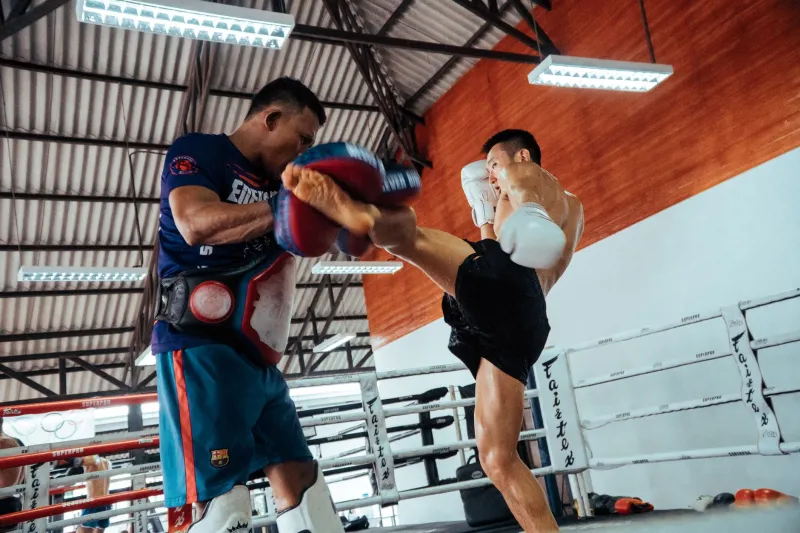
Krista Nguyen remembers the exact moment she stopped trying to understand her Thai trainer's words and started trying to understand what he meant.
She was three weeks into a training camp in Chiang Mai, frustrated and jet-lagged, when her kru — a former Lumpinee champion in his fifties — watched her throw a combination, shook his head slowly, and said something she couldn't quite catch. He then demonstrated the same combination at about half speed, with what looked like almost no effort, and somehow it was completely terrifying.
"I realized I'd been trying to hit hard," she says. "He was trying to hit right. Those are not the same thing at all. And I didn't have the vocabulary to understand that difference until I watched him move."
That gap — between what Thai coaches are communicating and what American fighters are actually receiving — is one of the most interesting and underexplored dynamics in the sport. Bridging it isn't just about language. It's about a fundamentally different relationship with combat, with learning, and with what it means to be a fighter.
The Communication Gap Is Real (And It's Not Just Words)
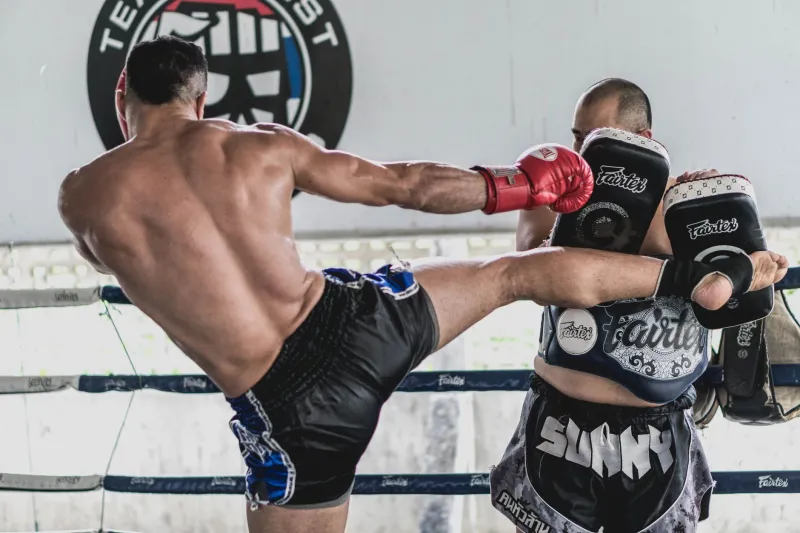
Anyone who's trained with a traditional Thai coach knows the experience. Instructions come in short bursts — sometimes in English, sometimes in Thai, sometimes in a mix of both — often accompanied by physical demonstration or a light tap on the body part that needs to move differently. Explanations are minimal. Repetition is expected.
For American fighters raised on a coaching culture that tends toward detailed verbal instruction and constant feedback, this can feel disorienting. We want to know why. We want the biomechanical breakdown. We want to understand the principle before we drill the movement.
Thai coaching tradition doesn't always work that way — and there's a reason for it.
"In Thailand, you learn by doing and watching, not by being told," explains Somchai Rattanakosin, a Thai-born coach who's been running a gym in the Los Angeles area for over fifteen years. "If I explain everything, you're thinking about the explanation. If I show you and make you do it a thousand times, you stop thinking. That's when you actually learn."
This philosophy — learning through embodiment rather than explanation — is deeply embedded in how Muay Thai has been taught and transmitted across generations in Thailand. For American fighters, accepting it requires a real shift in how they approach training.
What Happens When American Fighters Actually Adapt
The fighters who thrive under traditional Thai coaching share a common trait: they learn to be comfortable with ambiguity. They stop demanding to understand everything immediately and start trusting the process, even when the process doesn't come with a PowerPoint explanation.
Marcus Okafor, a 26-year-old from Atlanta who spent four months training at a camp in Pattaya, describes a turning point about six weeks in. "I stopped asking 'why' so much. Not because I gave up — but because I started seeing that the answers were in the drilling. If my kru made me do a teep 200 times in one session, the 200 reps were the explanation. By the end I understood things I couldn't have understood if he'd just told me."
That shift in learning mode produces something that's hard to put into words but easy to see on the pads: a kind of naturalness. Techniques stop looking like practiced sequences and start looking like instinct. Timing improves. Economy of motion improves. The fighter starts to look less like someone who studied Muay Thai and more like someone who simply does it.
The Philosophy Underneath the Technique
Beyond the physical technique, there's a philosophical framework embedded in authentic Muay Thai coaching that American fighters often don't encounter until they go looking for it.
The concept of jai yen — literally "cool heart" — is a good example. In Thai fighting culture, emotional control isn't just a mental health tip. It's a tactical asset. A fighter who stays calm under pressure doesn't just feel better; they see more, react more accurately, and make better decisions. Thai coaches often prioritize cultivating this quality as much as they prioritize any physical attribute.
For American fighters who've been conditioned to believe that aggression and intensity are the hallmarks of a great fighter, encountering this philosophy can be genuinely surprising.
"My trainer in Thailand used to get annoyed when I got too hyped up," says Nguyen. "Not during the fight — during training. He wanted me to be relaxed, even on the pads. I thought he was wrong. Turns out he was teaching me something I desperately needed."
The respect embedded in the wai kru isn't ceremonial window dressing either. Understanding it — really understanding it — changes how fighters relate to the art, to their gym, and to their opponents. Fighters who train with coaches who take these traditions seriously tend to carry themselves differently, both inside and outside the ring.
Making It Work Stateside
Not every American fighter can spend months training in Thailand. But the lessons don't require a plane ticket if you approach them with the right mindset.
Coach Somchai's advice for American fighters working with Thai coaches in the US is straightforward: "Watch more. Talk less. Show respect with your actions, not your words. If your kru tells you to do something, do it — don't negotiate."
For fighters used to the American coaching culture of constant dialogue and feedback loops, that's a significant ask. But the fighters who manage it consistently describe the same outcome: a deeper understanding of the sport that no amount of YouTube breakdowns or seminar attendance could have produced.
The translation gap between Eastern fighting philosophy and Western training expectations is real. But it's not a wall — it's a door. And the fighters who push through it don't just become better at Muay Thai. They become better at learning, period.
That might be the most useful thing the art has to offer.