Breaking the Mold: How American Fighters Are Putting Their Own Stamp on Muay Thai
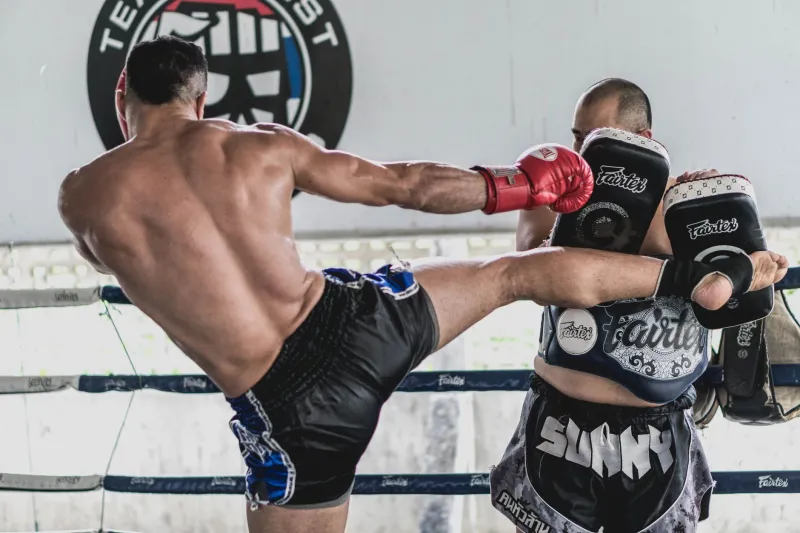
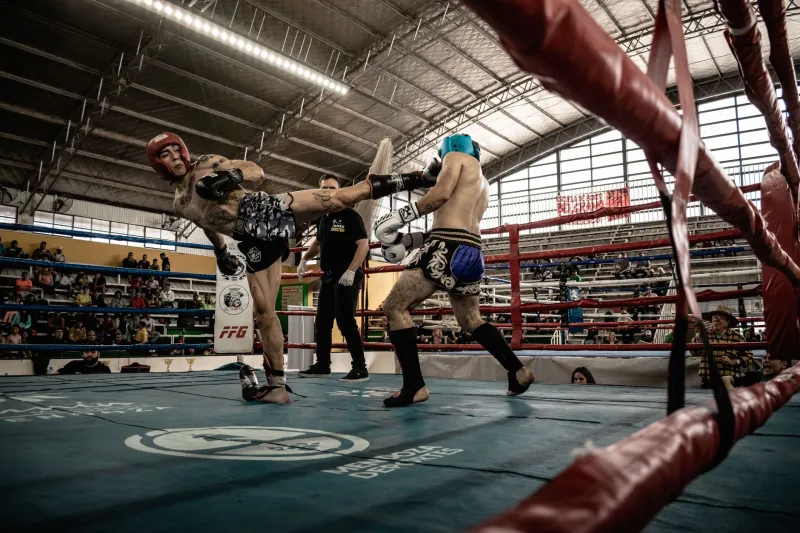
There's a scene that plays out in gyms across Thailand, and increasingly in gyms across America, that tells you everything about the current state of Muay Thai: a traditional Thai trainer watches a US-born fighter work the pads and slowly shakes his head. Not because the fighter is bad. Because the fighter is doing something unexpected — moving laterally off the strike, pivoting to a new angle, mixing in a level change that looks straight out of a wrestling room. "Not Muay Thai," the trainer mutters. The fighter smiles, because it worked.
That tension — between honoring a 2,000-year-old martial tradition and evolving it for modern competition — is defining the next chapter of the sport in the United States. And American fighters are right at the center of it.
The Hybrid Generation
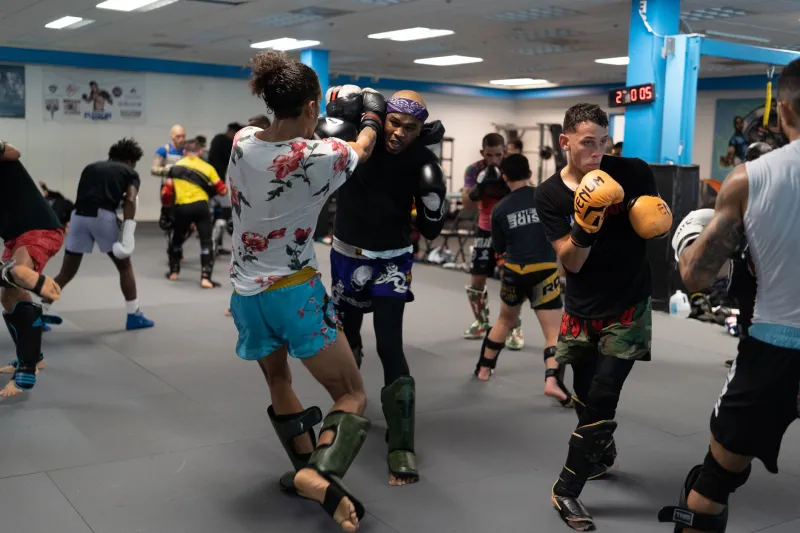
Understanding what's happening requires a quick look at how most American Muay Thai fighters come to the sport. Unlike their Thai counterparts, who often start training at age six or seven in dedicated Muay Thai camps with a single-discipline focus, most American practitioners arrive at Muay Thai after stints in other combat sports. Wrestling in high school. Boxing at the local PAL gym. Jiu-jitsu at the MMA academy down the street. Kickboxing on a whim.
That background isn't a limitation — it's a creative toolkit.
Fighters like Superbon Banchamek may have perfected the classical Thai style, but a growing wave of American competitors are entering the ring with a fundamentally different movement vocabulary. The wide, squared stance of traditional Muay Thai gets compressed into something more bladed and mobile. The slow, methodical rhythm of classic Muay Thai timing gets disrupted with bursts of combination punching pressure that look more like Philly-shell boxing than anything from a Bangkok stadium.
The result is a style that's harder to read, harder to time, and — critically — increasingly effective at the highest levels of international competition.
Footwork as a Weapon
If there's one technical element that separates the emerging American style from classical Muay Thai, it's footwork. Traditional Muay Thai is relatively linear — fighters engage on a narrow track, use the teep to manage distance, and rely on superior timing and power rather than angles to create openings.
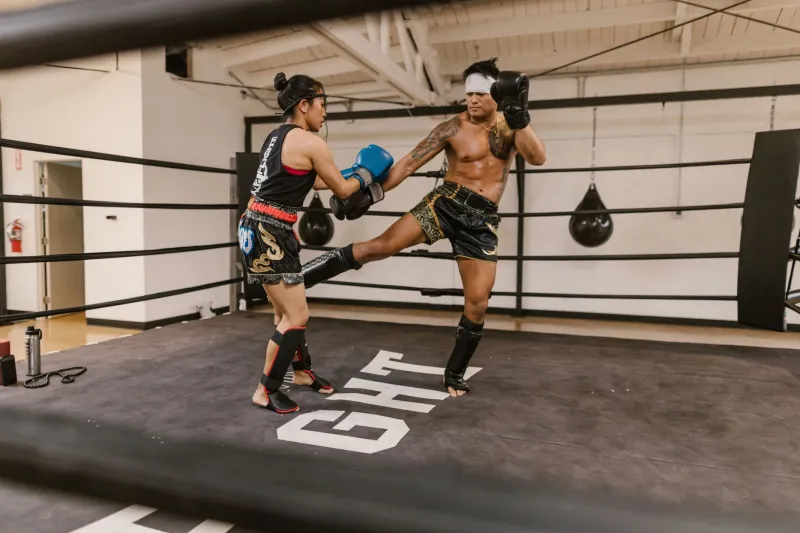
American fighters, shaped by boxing culture, are bringing a completely different spatial awareness to the ring. Lateral movement, pivoting off the centerline after a combination, circling away from an opponent's power side — these are bread-and-butter concepts in the Sweet Science, but they've historically been underutilized in Muay Thai.
When you combine that footwork with Muay Thai's devastating weapons — the diagonal kick, the knee in the clinch, the elbow at close range — you get something genuinely difficult to defend. You're not just hitting harder or faster; you're hitting from angles that your opponent's training didn't prepare them for.
Some critics argue this approach sacrifices the structural integrity of classical Muay Thai, where every position is built around optimal striking and defensive geometry. There's merit to that critique. Lateral movement can expose your legs to low kicks if your weight distribution is off, and pivoting incorrectly can leave you vulnerable to counters. The technique has to be sound, or the style falls apart under pressure.
But when it's done right? It's a problem.
The MMA Influence No One Wants to Talk About
Here's the uncomfortable truth that traditional Muay Thai circles don't always love to acknowledge: the explosion of MMA in the US has been a massive net positive for the technical evolution of American Muay Thai.
MMA forces fighters to think about striking from positions and angles that pure Muay Thai rarely addresses — off the cage, from the clinch against a wrestler, after a failed takedown attempt. American fighters who cross-train in MMA environments develop an adaptability that translates directly back to Muay Thai competition.
The use of level changes to disguise kicks, feinting with the head to open up body shots, using punch pressure to set up clinch entries — these tactical concepts are deeply embedded in American MMA culture and are now showing up in how US fighters approach Muay Thai matches.
Fighters like Sean Clancy and Josh Tonna — both of whom have competed internationally and drawn attention for their unorthodox approaches — represent a template that more young American fighters are studying. The ability to make a Muay Thai opponent uncomfortable with movement and angle before even throwing a strike is becoming a signature American calling card.
Strength and Conditioning: The American Edge
Beyond technique, there's a physical dimension to this conversation that deserves attention. American fighters, particularly those coming out of collegiate athletic backgrounds, often arrive at Muay Thai with a strength and conditioning infrastructure that traditional Thai training camps simply don't prioritize in the same way.
Modern American Muay Thai gyms — especially those affiliated with larger performance centers — incorporate periodized strength training, sports science recovery protocols, and data-driven conditioning programs that optimize a fighter's physical output over a full training camp. The result is fighters who are stronger, more explosive, and better conditioned than their raw technique alone might suggest.
Combine that physical platform with technical innovation, and you start to understand why American fighters are increasingly competitive on the world stage.
Tradition Isn't the Enemy
It would be a mistake to frame this as American arrogance steamrolling a revered tradition. The best American Muay Thai fighters aren't rejecting classical technique — they're building on top of it. You can't effectively blend Western boxing footwork with Muay Thai if you don't understand why Muay Thai's stance and movement principles exist in the first place.
The fighters making the biggest waves internationally are the ones who went deep on tradition before they started experimenting. They trained in Thailand. They worked with authentic Thai coaches. They learned the art before they started adapting it.
The evolution happening in American Muay Thai isn't about tearing something down. It's about what happens when a martial art meets a new culture — one with different athletic backgrounds, different physical builds, different competitive contexts — and grows in response. That's not a threat to Muay Thai. That's proof of its vitality.
The Debate Isn't Going Away
Is what American fighters are doing still Muay Thai? That question will keep getting asked, and it probably should. Tradition is worth defending. The cultural roots of this sport — its deep ties to Thai history, spirituality, and identity — deserve respect, not just lip service.
But sports evolve. They always have. The Muay Thai being fought in Bangkok stadiums today isn't identical to what was practiced a century ago either. Styles shift, tactics adapt, and new generations find new answers to old problems.
American fighters are asking new questions. And the answers they're finding are making the sport more interesting for everyone watching.
At Muay Thai Forge, we think that's worth celebrating — even if the debate is still very much alive.