Your Garage, Your Gym: Building a Muay Thai Training Space That Actually Delivers
There's something deeply satisfying about having a place to train that's always open, never crowded, and doesn't care if you show up at 11pm in your pajamas. A home gym won't replace your Muay Thai school — nothing replaces live partners and a good coach — but the right setup can seriously extend your training hours, sharpen your solo work, and keep your conditioning dialed in between classes.
The challenge? Doing it without wasting money on gear that ends up collecting dust, or building something that gets you evicted because your downstairs neighbor can hear every kick. Let's talk about how to actually pull this off in the American context.
First, Figure Out Your Space
Before you buy a single piece of equipment, you need an honest assessment of what you're working with.
Garage or basement: You've hit the jackpot. A standard two-car garage gives you roughly 400 square feet — more than enough for a heavy bag, a jump rope area, and some conditioning work. Concrete floors need rubber matting for both comfort and noise dampening. Expect to spend $150-$400 on good interlocking foam or rubber tiles to cover a training area.
Spare room: A 10x10 room is workable but tight. You can fit a freestanding bag and still have room for shadowboxing if you're strategic. Ceiling height matters — most heavy bag setups need at least 8 feet of clearance, ideally more.
Apartment: This is where it gets creative. Wall-mounted bags are generally off the table unless you own the place. Freestanding bags are your best friend. Noise is a serious issue — more on that in a minute. But don't count yourself out; plenty of fighters maintain sharp technique with nothing but a freestanding bag, resistance bands, and floor space.
The Noise Problem (And How to Solve It)
This is the conversation most home gym guides skip over, and it's the one that matters most for apartment dwellers and anyone with close neighbors.
A heavy bag on a standard chain mount transfers every impact directly into the structure of your home. That's a problem. Solutions that actually work:
- Bungee cord suspension systems absorb a huge amount of the shock and dramatically reduce noise transfer. Replace your standard chain with a quality bungee set ($30-60) and you'll notice the difference immediately.
- Freestanding bags with a wide base are inherently quieter because they don't hang from your ceiling. The tradeoff is they move around more and don't replicate the feel of a hanging bag perfectly.
- Rubber flooring under and around your bag absorbs foot impact from your stance and movement, which is often louder than the bag strikes themselves.
- Train during reasonable hours. This sounds obvious, but it's the most neighborly thing you can do. Even the best soundproofing setup has limits at 2am.
Budget Tiers: What to Buy at Every Level
Tier 1: The Starter Setup ($200-$500)
You're testing the waters or you're on a tight budget. Here's what gets you functional training:
- Freestanding heavy bag ($150-$250): Brands like Everlast and Title make solid entry-level options. Look for a base you can fill with water or sand — it matters for stability.
- Boxing gloves ($50-$100): Don't cheap out here. Venum, Fairtex, and Twins all have entry-level gloves that protect your hands properly. Aim for 14-16oz for bag work.
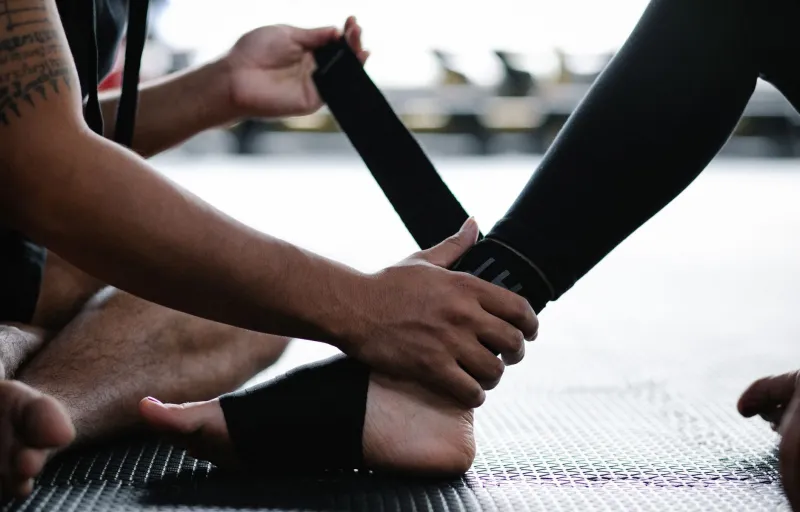
- Hand wraps ($10-$15): Buy two pairs. Always.
- Jump rope ($15-$30): A speed rope is ideal. This is one of the most underrated conditioning tools in Muay Thai.
At this tier, you can do bag work, shadowboxing, and jump rope conditioning. That's more than enough to build real skill between gym sessions.
Tier 2: The Serious Setup ($500-$1,500)
You're committed and want to train effectively at home on a regular basis.
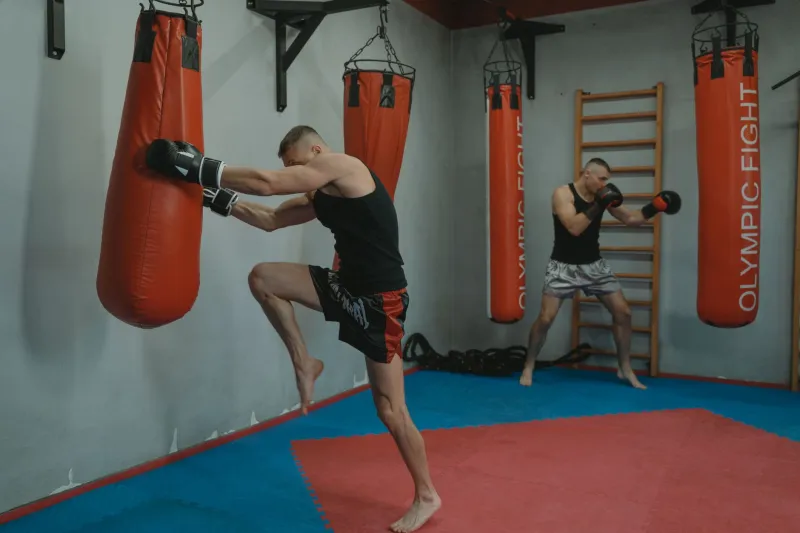
- Quality hanging heavy bag ($100-$200): A 100-150lb genuine leather or Thai-style bag is the gold standard. Twins and Fairtex make excellent bags; Ringside is a solid US-based option.
- Ceiling mount or heavy-duty stand ($80-$200): If you can hang from a joist, a proper ceiling mount is more stable. A good freestanding stand works if you can't.
- Rubber floor tiles ($150-$300 for a 10x10 area): Essential for safety and noise reduction.
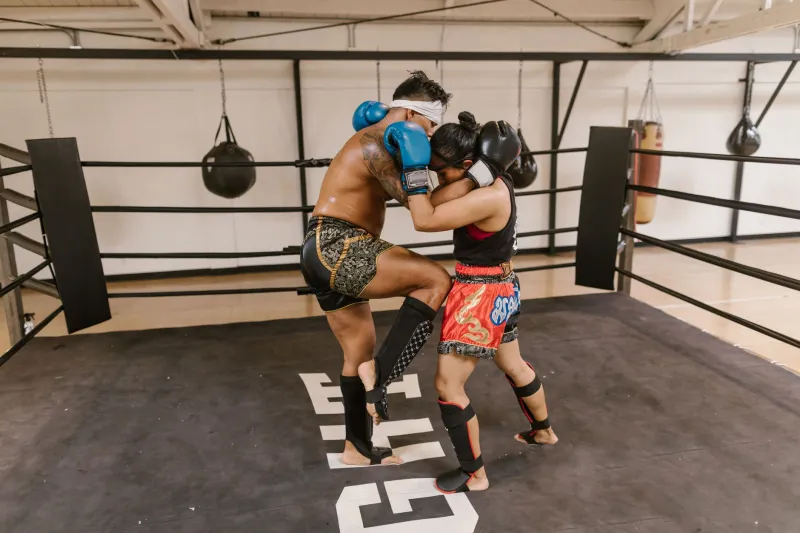
- Shin guards ($40-$80): For partner drills if a training partner visits.
- Double-end bag ($30-$60): Fantastic for timing, rhythm, and punching accuracy. Underused and underrated.
- Pull-up bar and resistance bands ($40-$80): Strength and conditioning work that directly translates to clinch power and shoulder stability.
Tier 3: The Dedicated Fighter Setup ($1,500+)
You're training seriously, possibly competing, and want a home setup that genuinely supplements your gym work.
- Premium heavy bag ($200-$400): Go leather, go heavy, go Thai-made if you can. It lasts longer and feels better.
- Freestanding pad station or wall-mounted pad target ($100-$200): Lets you practice combinations against a fixed surface with real feedback.
- Grappling/crash mat ($200-$400): If you're doing any clinch drilling or want to work entries and exits, a proper mat makes it safer and more realistic.
- Stationary bike or rowing machine ($300-$800): Low-impact cardio that doesn't beat up your joints between hard training days.
- Mirror or camera setup ($50-$300): Being able to watch your own shadowboxing technique is genuinely useful. Even your phone propped against a wall works.
What Home Training Is Actually Good For
Here's the honest truth: some aspects of Muay Thai can't be replicated at home. Sparring, partner drilling, clinch work against a resisting opponent, and the feedback of a good coach — those require other humans. Don't kid yourself into thinking a home gym replaces your gym.
What it's excellent for:
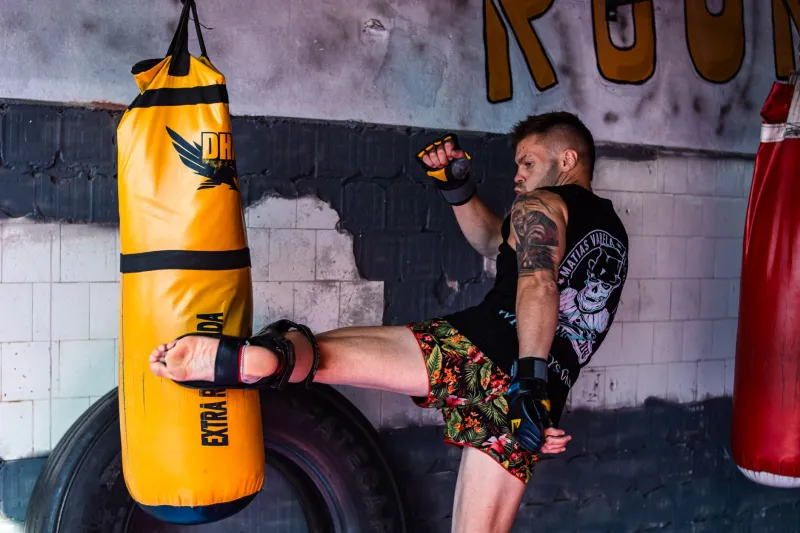
- Bag work and combination drilling. Repetition is everything in Muay Thai, and the bag is always available.
- Shadowboxing. This is where you actually think through your game, work your footwork, and build fluid movement. No equipment required.
- Conditioning. Jump rope, burpees, bike sprints, bodyweight circuits — all of this can be done at home and directly supports your gym performance.
- Mental reps. Visualization, reviewing fight footage, drilling combinations in your head. The home environment is actually ideal for this.
Sourcing Gear in the US
You've got solid options. Fairtex, Twins, and Top King gear can be ordered from US-based retailers like Muay Thai Pros, Tuff Sport, or direct from brand websites. Ringside and Title are American brands with strong distribution and good warranty support. Amazon works for accessories but be skeptical of no-name heavy bags — they tend to fall apart quickly under real use.
Check local martial arts gyms and Facebook Marketplace for used gear. A second-hand leather heavy bag in good shape is worth far more than a new cheap one.
Your home gym doesn't have to be perfect on day one. Start with what you can afford, use it consistently, and build from there. The best training space is the one you actually show up to.