Conquer Your Own Head: The Mental Playbook Every Muay Thai Beginner Needs
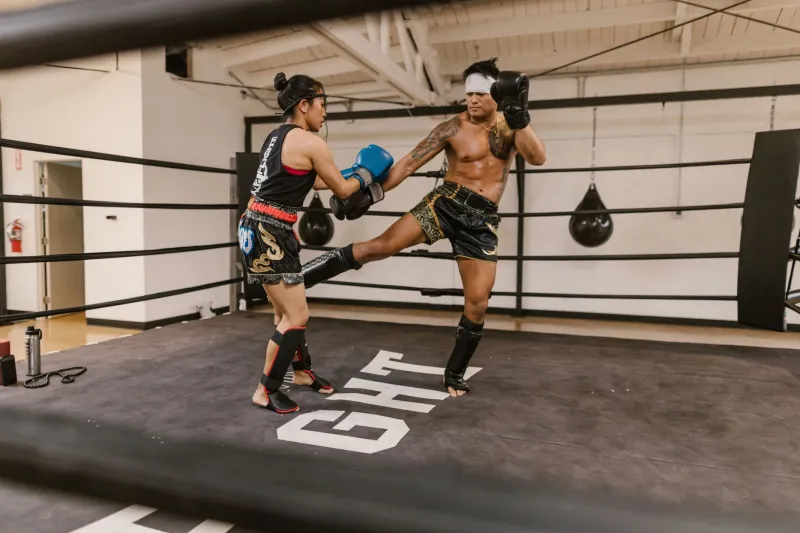
Here's something nobody tells you when you first walk into a Muay Thai gym: the hardest opponent you'll ever face isn't the person across from you in sparring. It's the voice inside your own head telling you to quit, to hold back, to protect yourself from embarrassment.
Every beginner knows that feeling. You've drilled the teep a hundred times on the bag, but the moment a partner steps in front of you, your brain freezes. Your combinations evaporate. You forget everything.
That's not a technique problem. That's a mental game problem.
The good news? The mind is trainable — just like your cardio and your clinch. Let's break down exactly how to do it.
1. Understand That Fear Is Part of the Process (Not a Sign You're Failing)
First things first: feeling anxious before sparring or competition is completely normal. Elite fighters feel it too. The difference is how they relate to that anxiety.
Beginners tend to interpret nervousness as a warning sign — I'm not ready, I'm going to get hurt, everyone will see how bad I am. Experienced competitors reframe that same physiological state as readiness. Your heart rate is up, your senses are heightened, your body is primed. That's not dread. That's your system gearing up to perform.
Psychologists call this "anxiety reappraisal," and research consistently shows it works. The next time your stomach tightens before you step on the mat, try saying — out loud if you need to — "I'm excited." It sounds almost too simple, but shifting the label changes how your nervous system responds to the situation.
You don't have to eliminate fear. You just have to stop letting it drive.
2. Build a Pre-Training Ritual That Signals Your Brain to Lock In
Top athletes across every sport use pre-performance routines, and Muay Thai practitioners should be no different. A ritual doesn't have to be elaborate. It just needs to be consistent.
Maybe it's a specific warm-up sequence, a playlist you only listen to before training, or a few minutes of focused breathing before you wrap your hands. The point is repetition. Over time, those actions become a psychological trigger — your brain learns that when you do X, it's time to focus.
Some fighters at the intermediate level swear by a simple breathing technique: four counts in through the nose, hold for four, out through the mouth for four. Do that five times before sparring and notice how it pulls your attention out of your thoughts and into your body. That shift — from mental chatter to physical presence — is exactly where you want to be when the round starts.
3. Visualization Isn't Woo-Woo — It's a Legitimate Training Tool
Visualization has been used by Olympic athletes, Special Forces operators, and professional fighters for decades. And no, it doesn't mean sitting cross-legged and manifesting a championship belt. It means deliberately rehearsing performance in your mind with as much sensory detail as possible.
Here's a practical way to use it for Muay Thai:
After drilling a combination during class — say, a jab-cross-low kick — spend two to three minutes before bed mentally running through that sequence. Don't just picture it vaguely. Feel the weight shift, hear the sound of the kick landing, notice your guard returning after the combination. The more vivid and specific, the more your nervous system treats it like actual repetition.
For sparring anxiety specifically, visualize yourself staying calm under pressure. Picture a partner throwing a hard combination and see yourself moving, covering, and responding without panic. You're essentially pre-loading a calm response pattern into your brain before you ever face that situation live.
Do this three or four times a week and within a month, you'll notice a difference in how composed you feel on the mat.
4. Spar to Learn, Not to Win — And Actually Mean It
This mindset shift is where most beginners stumble. They hear "sparring is just learning" and nod along, but the moment they get hit, their ego takes over and suddenly it's a war.
Here's the truth: the beginner who spars with genuine curiosity will outpace the beginner who spars with ego every single time. Why? Because curiosity keeps you open to information. Ego makes you tense, reactive, and closed off to the lesson your training partner is actually giving you.
A useful mental cue: every time you get hit with something clean, instead of getting frustrated, ask yourself how did that land? What was your position? What were you looking at? That question transforms getting hit from a failure into data.
Your sparring partners are your best coaches. The ones who give you the most problems are the ones teaching you the most.
5. Manage the Mental Load Between Rounds
Most people don't think about what happens in the 60 seconds between sparring rounds, but it's actually prime psychological real estate.
Beginners often spend that time replaying what went wrong, catastrophizing about the next round, or just zoning out. Neither of those approaches resets your mental state effectively.
Instead, use the break with intention. Slow your breathing deliberately. Pick one thing — just one — to focus on in the next round. Not five adjustments. One. Maybe it's keeping your chin down. Maybe it's throwing the teep more. A single point of focus keeps your mind from scattering and gives you something concrete to execute.
Over time, this habit of focused reset becomes automatic. You'll find yourself calmer, sharper, and more present in the later rounds when fatigue is pushing everyone else toward chaos.
6. Build Mental Toughness Through Deliberate Discomfort
Mental toughness isn't a personality trait you're born with. It's a skill built through repeated exposure to discomfort — and Muay Thai training is one of the best arenas on earth for developing it.
The key is leaning into the hard moments instead of mentally checking out. When the conditioning rounds get brutal and your legs are burning, that's the exact moment your mental training starts. Staying present, maintaining form, and choosing to push through when quitting feels justified — that's the rep that builds the warrior mindset.
Challenge yourself to stay technically focused when you're exhausted. It's easy to throw sloppy strikes when you're gassed. Choosing to stay disciplined in those moments is where real mental toughness is forged.
The Bottom Line
Your body can only go as far as your mind allows. In Muay Thai, the practitioners who break through plateaus and step into competition with confidence aren't always the most physically gifted — they're the ones who've done the internal work to show up present, focused, and unafraid of the process.
Start small. Pick one tip from this list and apply it in your next training session. Build the habit before adding another layer. The forge doesn't make a weapon overnight — it shapes it through consistent heat and pressure.
Your mind is the most powerful tool you bring to the gym. Train it accordingly.