From Sloppy to Sharp: How American Gyms Are Revolutionizing the Art of Pad Work
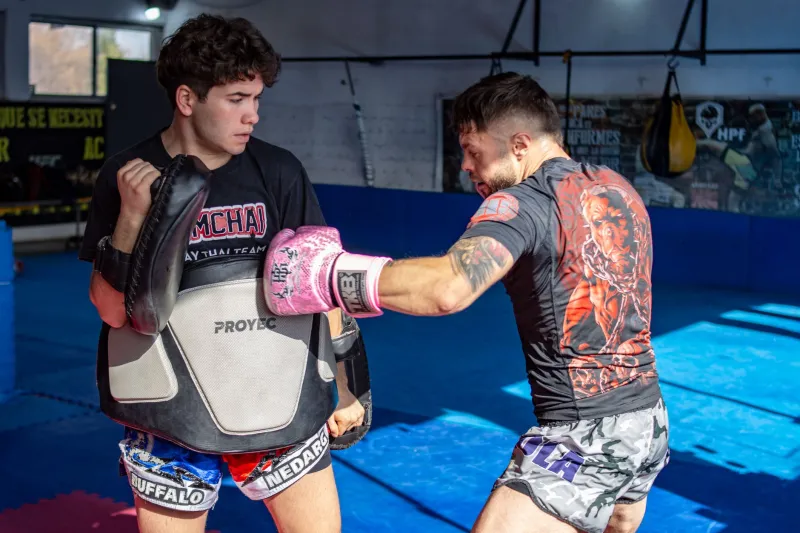
Walk into a Muay Thai gym in Chiang Mai or Bangkok and watch a seasoned kru hold pads for even a mid-level fighter. There's a rhythm to it — almost like a conversation. The holder moves, anticipates, feeds combinations, and gives instant feedback through the placement and angle of every pad. It looks effortless. It is anything but.
For a long time, that level of pad work was basically nonexistent in most American gyms. Coaches held pads like they were bracing for a car crash — stiff, flat, reactive rather than proactive. Fighters threw strikes into a wall instead of a dynamic training partner. And honestly? Nobody really knew what they were missing.
That's been changing, and fast.
The Old Way Wasn't Working
Let's be real about where a lot of US gyms were just five or six years ago. The MMA boom of the 2000s brought Muay Thai into mainstream American fitness culture, but it also diluted it. Gyms taught "Muay Thai-style" kickboxing, pad holders mimicked what they saw on YouTube, and the art's deeper technical DNA got lost in translation.
The biggest problem wasn't enthusiasm — American fighters have never lacked that. The problem was that pad holding was treated as a secondary skill. You got good at striking, and then someone handed you pads. There was no real curriculum for it, no mentorship, no standard. A lot of coaches were essentially figuring it out as they went.
The result? Fighters who looked decent on the mitts but fell apart in sparring or competition. Pad sessions that built bad habits — overextending on kicks, telegraphing punches, throwing without setup. The pads weren't teaching the fighter anything except how to hit something that wasn't hitting back.
What Changed — And Why Now
A few things converged to shake things up. First, more American fighters started traveling. Not just for camps or seminars, but for extended training stints in Thailand. They came back with a completely different understanding of what pad work was supposed to feel like — and a lot of them went on to become coaches.
Second, social media made elite technique visible in a way it never had been before. Fighters and trainers could watch Saenchai work mitts, study how top-level krus structured rounds, and actually analyze the mechanics of great pad holding. That exposure created a new baseline of expectation.
Third — and maybe most importantly — a generation of American fighters started competing internationally and getting humbled. When you go to ONE Championship or fight in a Thai stadium and get outclassed, you come home asking serious questions. A lot of those questions led back to the quality of pad work in training.
What Elite Pad Work Actually Looks Like
So what separates a gym that's getting it right from one that's still stuck in the old mode? Here's what to look for.
The holder moves with purpose. Great pad work involves constant footwork from the holder. They're not standing flat-footed and catching strikes — they're creating angles, backing up, cutting off space, simulating what a real opponent does. If your pad holder is just standing there, you're not getting a realistic training stimulus.
Combinations are coached, not just caught. The best pad holders are essentially calling plays in real time. They set up the combination before it happens — through the angle of the pad, a verbal cue, or a subtle shift in stance. Fighters learn to read and react, which directly translates to the ring.
Feedback is immediate and specific. Vague encouragement doesn't make better fighters. "Good kick" tells you nothing. "Drive through the target, don't pull back at contact" — that's coaching. Elite pad holders are constantly correcting technique mid-round without breaking the flow.
The holder creates realistic resistance. Pads should move on impact the way a real opponent would move. If your teep is landing and the pad barely budges, you're not learning how to actually push someone back. Good holders adjust resistance to challenge the fighter appropriately.
Voices from the Mats
Coaches who've done time training in Thailand are often the most vocal about the gap that still exists in American gyms — and the most motivated to close it.
The consensus from fighters who've trained abroad and now coach domestically is pretty consistent: the biggest mindset shift is understanding that the pad holder is not a passive participant. They're teaching every single second of every round. When American coaches start thinking of themselves as active instructors rather than just targets, the quality of training jumps immediately.
That shift is happening in pockets across the country — in gyms in LA, New York, Chicago, and smaller scenes in places like Austin and Portland. The common thread is usually a coach who trained seriously in Thailand or under Thai-trained instructors and brought that philosophy home.
How to Know If Your Gym Is Getting It Right
If you're a fighter or serious student looking to evaluate your gym's pad work culture, here are some honest questions to ask yourself:
- Does your coach hold pads, or do they delegate it to whoever's available? Pad holding should be a skill that's taken seriously at every level of the gym.
- Do your pad rounds feel like sparring lite, or like a workout with a target? If it's the latter, you're probably not getting the full benefit.
- Are you learning new things during pad work, or just reinforcing what you already do? The best sessions push you out of your comfort zone technically.
- Does your coach give you different looks — countering, moving, pressuring? Variety in pad holding builds adaptability in the ring.
If you're not happy with the answers, it might be worth looking for supplemental training, attending seminars with visiting Thai trainers, or having a direct conversation with your coach about evolving the approach.
The Road Ahead
American Muay Thai isn't where it needs to be yet — but it's closer than it's ever been. The gyms that are investing in coaching education, bringing in Thai trainers, and holding their pad holders to a higher standard are producing fighters who can compete at the international level. That's not an accident.
The art of holding pads might not be as glamorous as throwing a knockout elbow, but it might be the single most important factor in how good a fighter gets. The gyms that understand that are the ones worth training at.
Find yours. Then show up and make the most of it.