Stop Optimizing, Start Recovering: The Sports Science Mistakes Muay Thai Fighters Keep Making
At some point in the last few years, recovery became a sport unto itself.
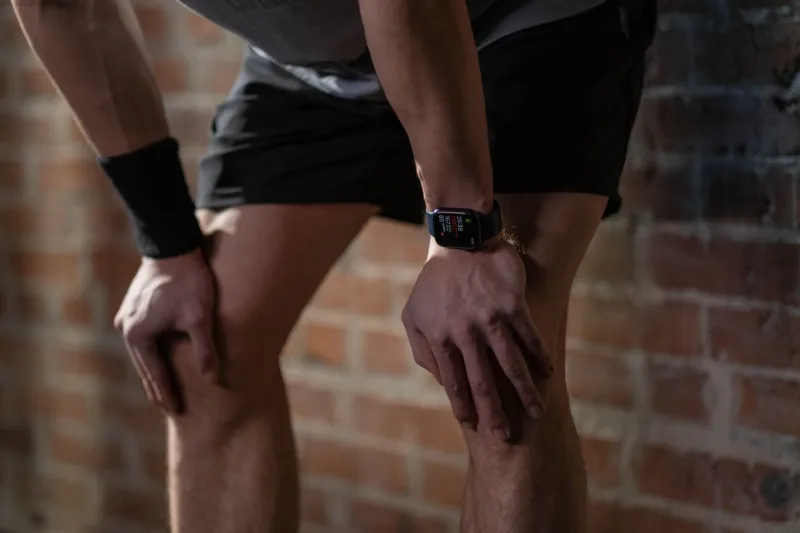
Talk to American Muay Thai fighters at the amateur and semi-professional level and you'll hear the same vocabulary popping up constantly: HRV scores, sleep staging data, readiness metrics, cold plunge protocols, peptide stacks, magnesium glycinate timing. The Whoop band. The Oura ring. The 47-supplement morning routine documented in a notebook next to the protein shaker.
None of this is inherently bad. Some of it is genuinely useful. But sports scientists and experienced Muay Thai coaches are increasingly pointing to a specific problem: the pursuit of optimized recovery has become, for many fighters, its own source of stress — which is exactly what recovery is supposed to eliminate.
Welcome to the recovery trap.
How We Got Here
The information explosion around sports science over the last decade has been legitimately valuable for elite athletes. Understanding sleep architecture, monitoring autonomic nervous system recovery through HRV, and timing nutrition around training sessions are all evidence-backed practices that have real performance implications at the highest levels.
The problem is that this information, designed primarily for professional athletes with full support staffs, has filtered down to recreational and amateur competitors who lack the context to apply it correctly — and who may be applying it in ways that create more problems than they solve.
"The data is real. The application is often wrong," said Dr. Priya Nair, an exercise physiologist who consults with combat sports athletes. "When a fighter wakes up, checks their HRV, sees a low readiness score, and then spends the whole training session anxious about whether they should even be training — the anxiety they generated from reading the data is now worse for their performance than whatever physiological state they were in to begin with."
This phenomenon even has a name in some research circles: nocebo-driven performance decline. You expect to perform badly because a number told you to, and so you do.
The Metrics That Actually Matter for Muay Thai
Not all tracking is created equal, and the distinction matters enormously for combat sports athletes.
Muay Thai is a skill-heavy, tactically complex sport with significant physical demands — but the physical demands are highly variable depending on training phase, competition schedule, and individual recovery capacity. What works for a marathon runner's periodization data doesn't map cleanly onto a fighter's eight-week camp.
Coach Terrence Holloway, who's trained fighters at gyms in Dallas and Houston for over a decade, keeps it simple with his athletes: "I ask three questions every session. How'd you sleep? How's your body feel? How's your head? If two out of three are good, we train. If all three are bad, we adjust. You don't need a $400 ring to tell you that."
That subjective self-assessment — what researchers call session RPE (rate of perceived exertion) and wellbeing questionnaires — is actually well-supported in the sports science literature as a reliable indicator of training readiness. The athlete's own perception of their state is a legitimate data point, and it's one that requires no device to collect.
For fighters who do want to use objective metrics, Dr. Nair recommends narrowing the focus sharply. "HRV trends over time — not individual readings — can be useful for identifying accumulated fatigue. Sleep duration matters more than sleep score. And body weight in the morning, relative to your baseline, tells you a lot about hydration and systemic stress. That's three data points. Three. Most fighters I work with are tracking fifteen and acting on all of them."
The Supplement Spiral
The recovery supplement market has become a genuinely difficult landscape to navigate, partly because it's so good at sounding scientific.
Adaptogens, nootropics, recovery peptides, sleep optimization stacks — the marketing language is sophisticated enough that it's easy to mistake it for clinical evidence. And while some supplements do have real research behind them (creatine, magnesium, vitamin D, and caffeine timing are among the more robustly studied), the way fighters are combining and sequencing these products has outrun any evidence base that exists.
"I had a fighter come to me tracking nineteen different supplements," Dr. Nair said. "He couldn't tell me what most of them were supposed to do specifically. He just kept adding things because he read that each one might help. The cognitive load of managing that protocol was real. And none of it was addressing the actual issue, which was that he wasn't sleeping enough because he was training too late at night."
The fix was simple: move the evening session earlier. Sleep improved. Performance improved. The supplements became irrelevant.
What Over-Optimization Actually Costs You
There's a concept in training theory called the stress-adaptation cycle. You apply a training stress. You recover. Your body adapts to a higher level of capacity. Repeat.
The cycle requires the stress part to work. Adaptation doesn't happen without it. And here's where the recovery obsession creates a specific, underappreciated problem for Muay Thai fighters: when the goal becomes eliminating all fatigue and optimizing every recovery variable, fighters often start avoiding the training loads that would actually drive meaningful adaptation.
They skip hard sparring sessions because their HRV is low. They pull back on bag work because their sleep score was 74 instead of 85. They treat every sign of tiredness as a warning sign rather than as a normal consequence of doing difficult training.
"Fatigue is not the enemy," Coach Holloway said. "Accumulated fatigue without adequate recovery is the enemy. There's a difference. A fighter who's never tired is a fighter who's not working hard enough."
A Simpler Framework That Actually Works
For Muay Thai fighters who want to take recovery seriously without falling into the optimization trap, the practical framework is genuinely straightforward.
Prioritize sleep duration above everything else. Seven to nine hours for most adults. No device, supplement, or protocol compensates for consistent sleep debt. This is the single most impactful recovery lever available, and it's free.
Eat enough food, particularly carbohydrates around training. Under-fueling is rampant among weight-class athletes and it tanks recovery more reliably than almost anything else. The recovery stack means nothing if the fuel isn't there.
Use subjective wellbeing as your primary training readiness signal. How do you feel? How do you actually feel, honestly? That question, answered honestly, is remarkably accurate.
If you track HRV, look at weekly trends — not daily numbers. A single low reading is noise. A week of consistently declining readings is a signal worth responding to.
Limit your supplement stack to things with actual evidence behind them. Creatine. Magnesium if you're deficient. Caffeine timed appropriately. Vitamin D if you live somewhere that gets minimal sun. Everything else can wait until you've nailed the fundamentals.
The goal isn't to feel perfect every time you walk into the gym. The goal is to build a fighter who's durable, adaptive, and capable of performing when it counts.
Sometimes that means putting the Whoop data aside and just training.