Move to Hit, Hit to Move: The Footwork Combinations Elite Thai Fighters Use That American Gyms Ignore
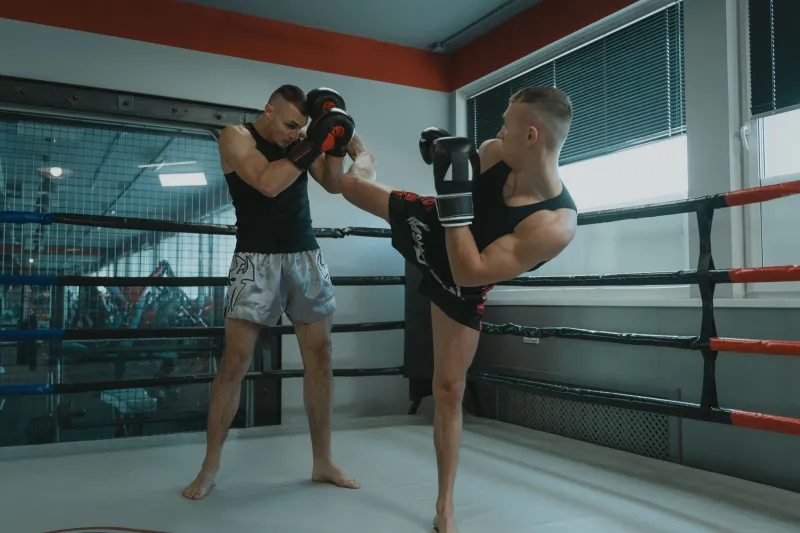
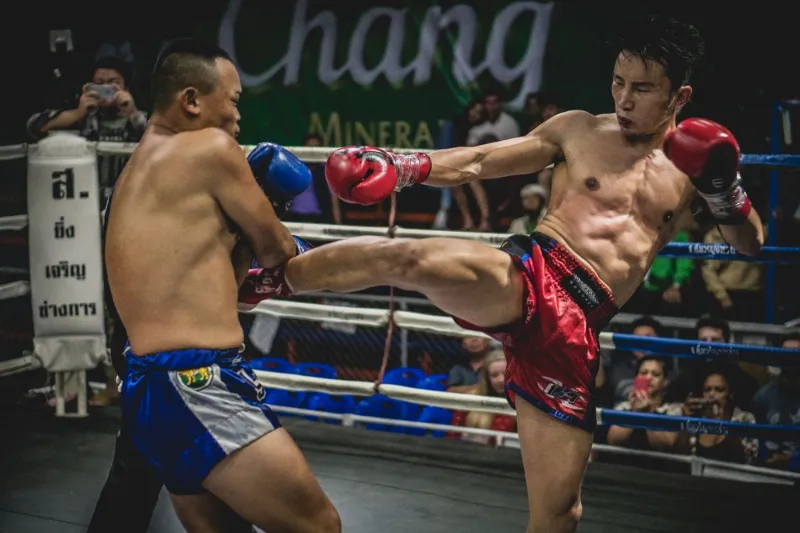
Watch a seasoned Thai fighter work and you'll notice something that's easy to miss at first glance. Before the big kick lands, before the elbow finds its mark, there's a sequence of steps — deliberate, rhythmic, almost deceptive — that sets the whole thing in motion. That's not incidental movement. That's craft.
In most American gyms, footwork gets a single bullet point in the curriculum. "Move your feet. Don't be flat-footed. Stay on the balls of your feet." Check, check, check. But the conversation almost never advances beyond that baseline. The result? Fighters who can move, but can't use movement as a tool. There's a massive difference.
Elite Muay Thai — the kind refined over decades in Thailand's training camps — treats footwork combinations the same way it treats strike combinations. Sequences. Patterns. Setups. The feet don't just carry the fighter from point A to point B. They manipulate the opponent's position, timing, and perception. And right now, that's a gap in American training that's costing fighters rounds, fights, and development.
What a Footwork Combination Actually Is
Let's get specific. A footwork combination isn't just "step left, then kick." It's a sequenced movement pattern that creates a predictable reaction in your opponent — and then exploits that reaction.
Think about the pivot-angle entry. A fighter steps forward on the lead foot, drawing a defensive response from the opponent — a slight weight shift back or a guard adjustment — then pivots 45 degrees off-center to land outside the opponent's lead leg. That pivot doesn't just reposition the fighter. It completely reorganizes the geometry of the exchange. Suddenly the opponent's rear hand is out of play, their ribs are exposed, and their base is compromised. The strike that follows isn't powerful because of arm strength or hip rotation alone. It's powerful because the footwork combination created a structural advantage before the attack even began.
That's the concept American training often glosses over: footwork combinations manufacture openings rather than waiting for them to appear.
Three Patterns Worth Drilling Right Now
The Lateral Bait-and-Angle
Step laterally to the outside, drawing your opponent to turn and track you. The moment they commit to that rotation, cut back diagonally with a switch step and attack the now-exposed line. This works because human tracking instinct is slightly delayed — by the time your opponent has adjusted their stance to follow your lateral movement, you've already changed direction. The diagonal re-entry catches them mid-adjustment.
Drill it: Have your partner shadow you as you step laterally. Your job is to time the switch back to coincide exactly with their tracking step. At first do it without striking. Just get the timing of the geometry down.
The Pressure-Release Combo
Step forward aggressively twice — not to attack, just to crowd. Most opponents will step back or load up defensively. On the third step, stop short and let them come back toward you. That returning momentum is your setup. Their weight is moving forward, their guard is opening, and you've got the timing. A short rear-hand strike or a knee from the clinch catches them mid-transit.
This is a patience drill as much as a footwork drill. A lot of American fighters can't resist throwing on those first two pressure steps. Resist it. The weapon is the third beat.
The Retreat-and-Counter Triangle
Instead of retreating straight back — which is predictable and gives ground freely — step back at 45 degrees and immediately redirect forward at the opposite 45. This creates a triangle path that confuses the opponent's attack trajectory and puts you in position to counter from an unexpected angle.
Think of it like this: if your opponent is throwing a straight right, stepping straight back keeps you in the line of fire and sacrifices distance. The triangle step takes you off the line and drops you into a flanking position in one motion. The counter that follows is almost automatic.
The Biomechanics Behind Why This Works
None of this is magic. There's real biomechanical logic to why footwork combinations are so effective.
When a fighter moves, their opponent's nervous system is constantly processing positional data and updating threat assessments. Sudden directional changes overload that processing loop — even briefly. And briefly is all you need. A quarter-second of cognitive lag is enough to land a clean strike or establish clinch control.
Additionally, footwork combinations shift your opponent's weight in ways that compromise their structural stability. A fighter whose weight is transitioning between feet cannot generate full power, cannot absorb a strike as effectively, and cannot change direction as quickly. By engineering those transitions through deliberate movement patterns, you're essentially reducing your opponent's physical capacity before the exchange even begins.
There's also a psychological dimension. Fighters who move with clear intention and pattern — even if the pattern is designed to deceive — project a different kind of presence than fighters who shuffle around reactively. Purposeful footwork reads as controlled, experienced, and dangerous. That matters in a fight.
Why American Gyms Are Behind on This
Here's the honest answer: footwork combinations are hard to teach and hard to film. Striking combinations are visual and satisfying. A sharp three-punch combo followed by a body kick looks great on Instagram. A pivot-angle entry that creates a structural opening and leads to a clinch takedown? Much harder to package.
American Muay Thai culture has also been heavily influenced by kickboxing and MMA, where footwork tends to be more reactive and less sequenced. The Thai camp tradition of drilling specific movement patterns over hundreds of repetitions until they become instinctive simply isn't as deeply embedded in how most US gyms operate.
That's not a knock on American coaches — it's an observation about where the training culture has focused its energy. And it's fixable.
How to Close the Gap in Your Training
Start with shadow work. Dedicate 10 minutes of every session to moving without striking — just rehearsing footwork sequences. Lateral steps into pivots. Pressure steps into retreats. Triangle retreats into re-entries. Drill the geometry until it stops feeling deliberate and starts feeling natural.
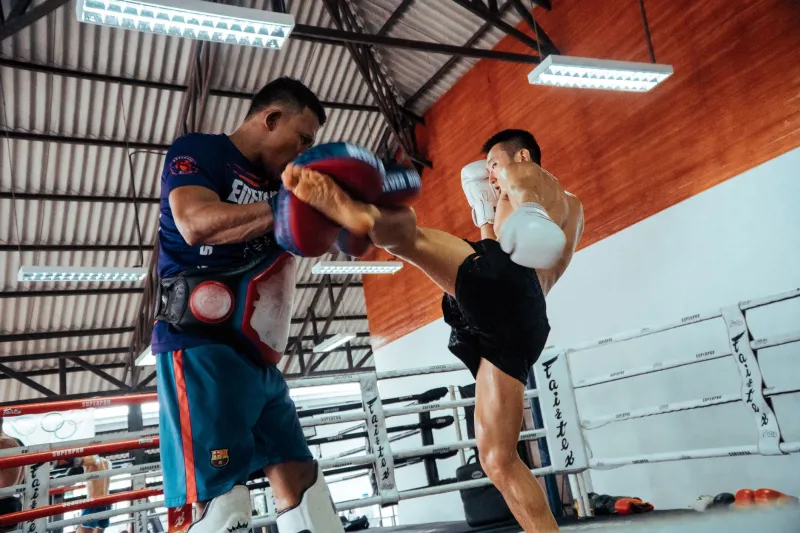
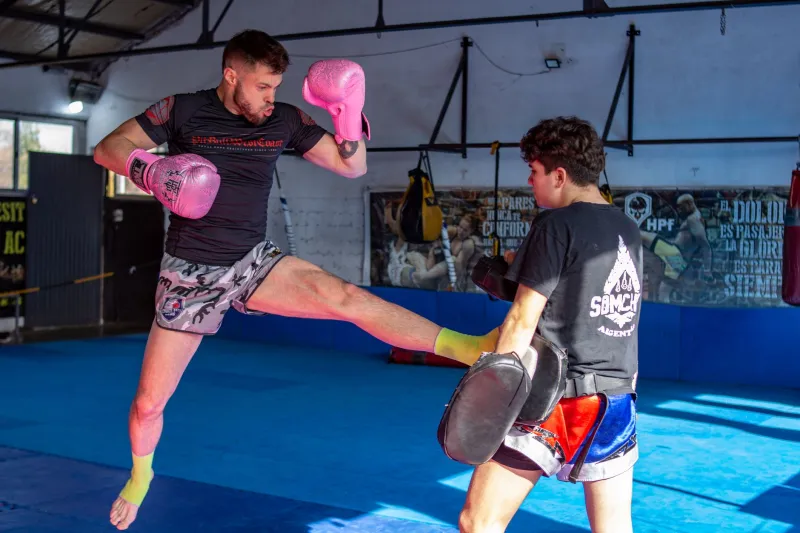
Then bring it into pad work. Ask your pad holder to move and respond rather than standing static. Footwork combinations only develop properly when there's a reactive element. A pad holder who tracks you, crowds you, and retreats on cue gives you something real to work against.
Finally, watch Thai fighters with the sound off. Specifically watch their feet. You'll start to see the sequences — the setups, the baits, the pivots — that you've been missing while watching their hands.
The strikes are what people remember. But the footwork is what makes them possible. It's time American training caught up.