Push It or Lose It: The Teep Is the Most Underrated Tool in American Muay Thai
Walk into almost any Muay Thai gym in the United States on a busy Tuesday night and you'll see the same thing. Fighters drilling hard cross-jab combos. Heavy bag sessions loaded with round kicks and elbows. Clinch work that looks more like a wrestling scramble than anything you'd see in Lumpinee. But ask a coach when the last time their fighters drilled the teep for a full round — really drilled it, with intention and purpose — and you'll get a long pause.
The teep, or push kick, is Muay Thai's most quietly powerful weapon. And in American gyms, it's treated like a garnish instead of the main course.
What the Teep Actually Is (And What It Isn't)
Let's clear something up first. A lot of newer fighters think the teep is basically a front kick — something you throw when you want to keep someone off you, kind of like swatting a fly. That framing is doing a lot of damage.
The teep is a range-management system disguised as a single technique. When used correctly, it controls the entire geometry of a fight. It decides where your opponent stands, how they move, when they can commit to attacks, and when they can't. Thai fighters don't throw the teep occasionally. They build their entire offensive and defensive frameworks around it.
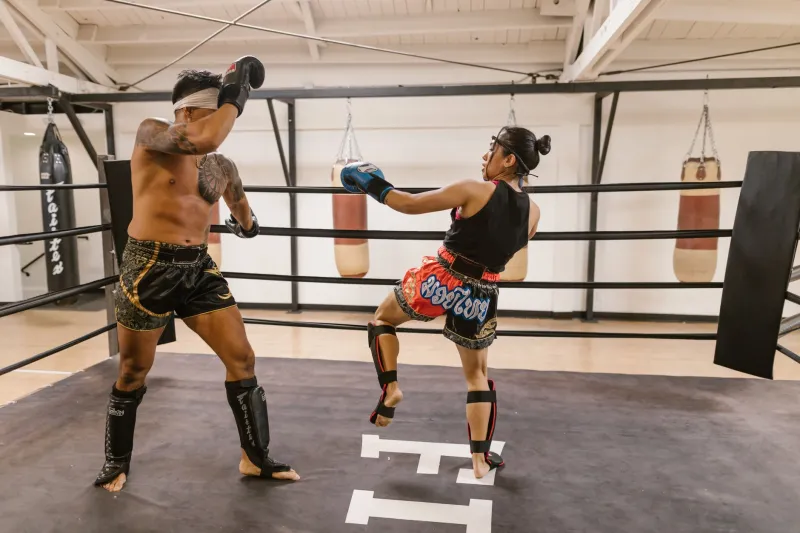
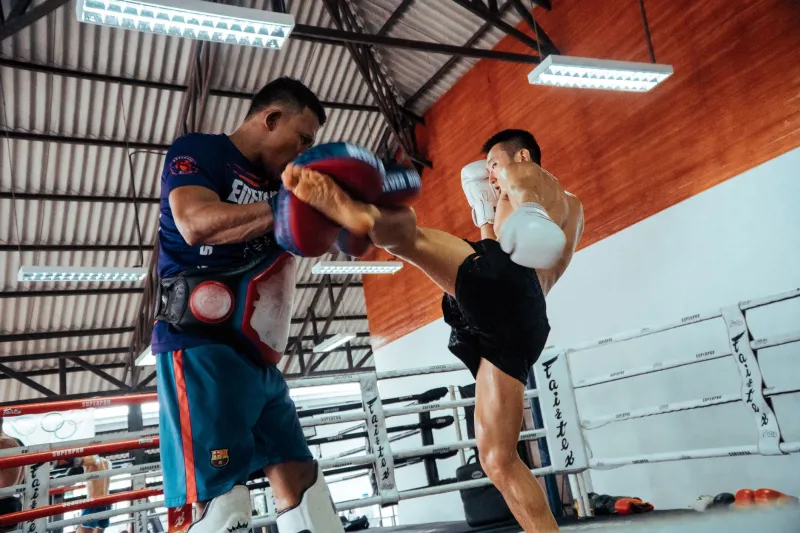
Biomechanically, a well-executed teep starts from the hip. The knee drives up sharply — not lazily — before the leg extends through the target. The ball of the foot connects with the opponent's midsection, chest, or hip, generating a horizontal force that disrupts their base. Done right, it doesn't just push someone back. It takes away their balance, their rhythm, and their timing all at once.
Why American Fighters Skip It
Here's the honest truth: the teep doesn't feel exciting. It doesn't generate crowd noise the way a clean head kick does. It doesn't end fights dramatically. In a culture that prizes highlight-reel moments — especially in the age of social media clips — techniques that control rather than destroy tend to get deprioritized.
There's also a competitive context issue. Many American fighters come up through kickboxing, boxing, or MMA backgrounds where the push kick exists but plays a smaller role. When they transition to Muay Thai, the instinct is to layer Thai techniques on top of existing habits rather than rebuild the foundation. The teep gets added to the toolkit, but it never becomes load-bearing.
Coaches across the country have noticed this pattern. The fighters who struggle most with the teep are usually the ones who think about it as an individual technique rather than a posture — something you do rather than something you are.
The Cost of Ignoring It
Not developing your teep isn't a neutral choice. It's a trade-off that shows up in very specific ways during competition.
Without a reliable teep, fighters have no clean answer to pressure. When an aggressive opponent walks them down, they're forced to either clinch early, circle out desperately, or eat shots while trying to reset. None of those options are great. The teep gives you a fourth option — stop them in their tracks, reset the distance on your terms, and keep them guessing.
Defensively, the teep is one of the best tools for interrupting combination attacks. A well-timed push kick thrown as someone loads up for a big kick or punch doesn't just block the attack — it punishes the attempt. That's a fundamentally different kind of defense than blocking or slipping.
In scoring terms, Thai judges (and increasingly American judges operating under Muay Thai rulesets) reward fighters who control the pace and space of a fight. A fighter who throws a teep every time their opponent gets close is demonstrating ring generalship, composure, and technical dominance — all things that win rounds even when the action looks less explosive on the surface.
How to Actually Build the Teep Into Your Game
The first step is simple but uncomfortable: spend time with it when it feels awkward. Most fighters abandon the teep in sparring because it doesn't work immediately. That's exactly when you need to keep using it.
Start with your stance. A lot of American fighters stand too square or too upright to generate a strong teep. Work with your coach on hip positioning — the ability to load the teep quickly comes from how you carry your weight between rounds, not just how you throw the kick.
Drill the teep in isolation before combining it. A common training approach is to spend the first five minutes of bag work doing nothing but teeps — varying the height (midsection, chest, hip), the timing (reactive vs. proactive), and the follow-up action. This builds the muscle memory that lets the technique flow naturally in sparring.
Then add it to combination setups. The teep-to-cross is a classic for good reason. Push your opponent back, close the distance on your terms, fire the cross while they're still recovering their base. Once opponents recognize that pattern, you can start using the teep as a feint — chambering the knee to freeze their movement before shifting to a round kick instead.
Pad work is where it really comes together. Ask your pad holder to pressure you — to walk forward with aggression — and practice stopping them with the teep before they get inside your range. This is closer to the real fight scenario than static drilling, and it builds the timing that makes the teep actually work when it counts.
The Fighters Who Get It Right
Look at the American fighters who've had the most success competing internationally or at the top of domestic promotions. Almost without exception, they've made the teep a consistent part of their game. It's not a coincidence.
When you watch footage of elite Thai fighters — or American fighters who've done serious time training in Thailand — the teep appears constantly. It's not thrown in desperation. It's thrown with intention, at the start of exchanges, in the middle of combinations, and as a reset after clinch breaks. It's woven into everything.
That level of integration doesn't happen by accident. It happens because somewhere in their development, a coach told them the teep wasn't optional — and they believed it.
The Bottom Line
American Muay Thai is getting better every year. The depth of talent at domestic promotions, the quality of coaching available, and the number of fighters making noise internationally are all trending in the right direction. But there are still technical gaps, and the teep sits near the top of that list.
If you're training seriously and your teep is an afterthought, you're leaving a major weapon on the table. Not a flashy one. Not one that's going to get shared on Instagram. But one that wins fights — quietly, consistently, and on your terms.
Push it or lose it. The choice is yours.