Rooted or Ruined: How Bad Foot Placement Is Quietly Wrecking American Fighters
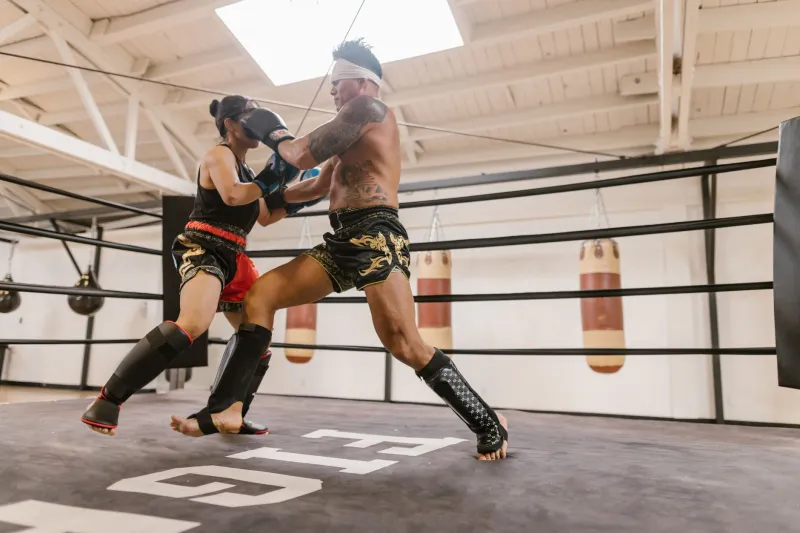
Ask any coach at an American Muay Thai gym what they spend the most time correcting, and you'll get a dozen different answers — lazy guards, dropped hands, telegraphed kicks. Rarely does anyone say footwork. And that's exactly the problem.
Foot placement is the foundation everything else is built on. Get it wrong, and your strikes lose power, your defense springs leaks, and you become a sitting duck for sweeps. Get it right, and suddenly everything else — your timing, your combinations, your clinch entries — starts clicking into place almost automatically. Yet gym floor after gym floor across the US, fighters are drilling their hands and ignoring their feet, and they're paying for it every time they step into the ring.
Let's break down what's actually going wrong, why it matters more than most people realize, and how to fix it with a progression that works whether you're training solo in your garage or drilling with a partner at your local gym.
What "Bad Footwork" Actually Looks Like
Bad foot placement isn't always obvious. It's not always the guy stumbling around the ring. More often, it's subtle — a fighter whose rear foot points too far outward, whose weight distribution shifts at the wrong moment, or whose stance width drifts depending on how tired they are.
Here are the most common patterns showing up in American gyms right now:
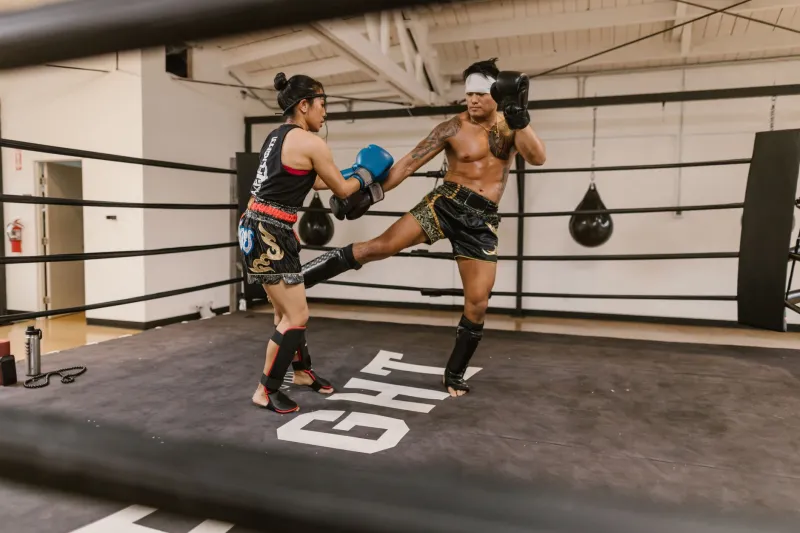
The Wide Stance Trap. A lot of fighters — especially those crossing over from wrestling or BJJ backgrounds — naturally default to a stance that's too wide. It feels stable, and in a grappling context it is. But in Muay Thai, excessive width kills your ability to pivot, makes your kicks slower to chamber, and turns you into an easy target for leg kicks because your base is spread and immovable.
Parallel Feet Syndrome. Both feet pointing forward sounds athletic, but it creates serious problems for rotation. Effective Muay Thai striking — especially rear kicks and crosses — requires hip rotation, and that rotation is strangled when your rear foot doesn't have a slight outward angle. Fighters with parallel feet often compensate by leaning into shots, which tanks their balance.
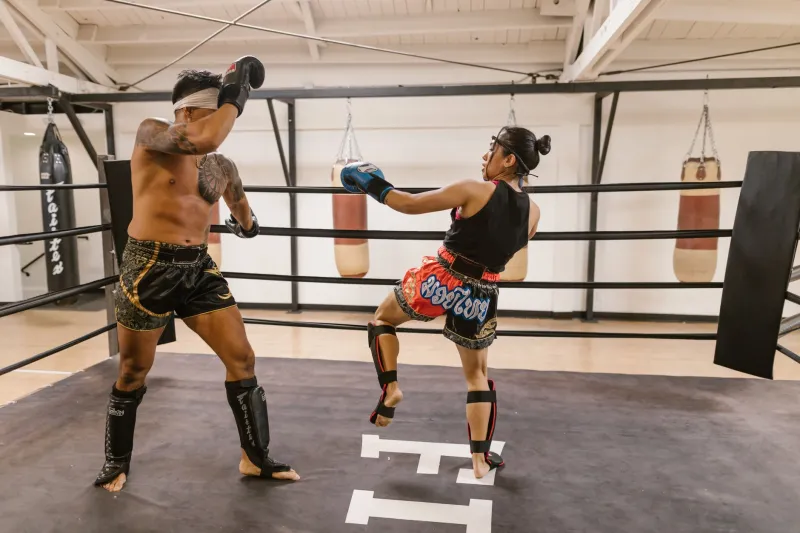
The Floating Heel. This one's sneaky. Fighters who carry too much weight on the balls of their feet look light and fast, but they're actually unstable. One solid push from a clinch, one well-timed sweep, and they're on the canvas. A properly grounded fighter maintains contact through the heel — not rigidly, but as a consistent anchor point.
Weight Distribution Drift. This might be the most damaging pattern of all. Fighters who shift their weight forward when they attack — and don't reset — become predictable and vulnerable. Thai fighters are notorious for reading this drift and timing sweeps or counters right as the opponent commits.
Why This Cascades Into Bigger Problems
Here's what makes poor foot placement so dangerous: it doesn't just create one problem. It creates a chain reaction.
When your base is off, your strikes lose structural integrity. A roundhouse kick thrown from a misaligned stance doesn't transfer force efficiently — you're essentially hitting with muscle instead of mechanics. When your weight distribution is wrong, your defense becomes reactive instead of proactive because you're already off-balance before anything happens. And when your footwork is sloppy, your clinch game suffers badly — you can't generate the leverage needed to control or off-balance an opponent if you can't maintain your own ground.
Swept fighters are almost always fighters whose weight was already in the wrong place. The sweep didn't create the problem — it just exposed it.
The Rebuild: A Progression That Actually Works
The good news is that foot placement is a correctable skill, and it responds well to deliberate, progressive drilling. Here's a systematic approach you can start applying today.
Step 1: Stance Audit (Solo)
Before you drill anything, you need to know exactly where your defaults are. Stand in your fighting stance and have someone film you from the front, side, and rear. Check:
- Stance width (roughly shoulder-width is the starting benchmark)
- Rear foot angle (aim for 30–45 degrees outward)
- Where your weight is sitting (even distribution between both feet, slight bend in the knees)
- Heel contact (both heels should be in light, consistent contact with the floor)
This is your baseline. Everything you drill from here is about building new defaults.
Step 2: Slow Shadow with Deliberate Resets (Solo)
Shadow boxing at 30% speed sounds boring. It's not — it's where real change happens. After every single technique you throw, pause and consciously reset your stance. Check your feet. Adjust if needed. Then move again.
This is painful at first because your body wants to rush back to its default patterns. Stick with it for three five-minute rounds every session for two weeks and you'll feel the difference.
Step 3: Stance Width Ladder Drill (Solo or Partner)
Using tape or chalk, mark three stance widths on the floor — narrow, shoulder-width, and wide. Practice moving in and out of each, throwing a jab-cross at each position, then resetting. The goal isn't to find the "perfect" width in isolation — it's to build body awareness so you know where your feet are at all times, even under pressure.
Step 4: Push Resistance Drill (Partner)
This one exposes weight distribution problems fast. Stand in your stance while a partner places one hand on your lead shoulder and one on your rear hip. They apply light, random pressure in different directions while you maintain your position without shuffling your feet. If you're easy to budge, your weight distribution is off.
Work this drill for two-minute rounds, focusing on keeping your base solid without becoming rigid. You want roots, not concrete.
Step 5: Sweep Awareness Sparring (Partner)
Once your baseline is improving, add consequence to your footwork by incorporating light sweep attempts into technical sparring. Your partner's job is to read your weight drift and time a sweep attempt whenever they feel you commit forward. Your job is to stay rooted without sacrificing offensive output.
This drill is uncomfortable. That's the point. It forces your nervous system to associate proper foot placement with survival, which is exactly how lasting habits form.
Making It Stick
The honest truth is that most American fighters skip this work because it's unglamorous. Nobody posts slow shadow boxing clips online. Nobody brags about their stance audit. But the fighters who put in this foundational work are the ones who look effortlessly balanced in the ring — the ones whose opponents can't quite figure out why they keep getting swept, why their counters aren't landing clean, why everything feels slightly off.
At Muay Thai Forge, we talk a lot about the craft behind the sport. This is the craft. It's not exciting on the surface, but it's the difference between a fighter who looks good in the gym and a fighter who performs when it counts.
Fix your feet. Everything else gets easier.