Grip, Grind, Gas Out: Why Clinch Cardio Is the Missing Piece in American Muay Thai Training
The Cardio Gap Nobody Talks About
You've done your roadwork. You've crushed three rounds on the heavy bag. Your pad work looks sharp and your conditioning feels solid heading into fight camp. Then you hit the clinch — and thirty seconds in, your arms are dead, your lungs are on fire, and you're hanging on for dear life.
If that sounds familiar, you're not alone. It's one of the most common complaints trainers hear from American fighters stepping up their competition level, and it points to a real gap in how most gyms structure conditioning work. Traditional cardio — running, cycling, even pad rounds — builds a solid aerobic base. But the clinch is a different kind of brutal, and it takes a different kind of preparation.
More and more US-based competitors are figuring this out and quietly overhauling their programs to fix it. The results are showing up in fights.
What Makes Clinch Work So Physically Demanding
To understand why standard conditioning falls short, you have to understand what's actually happening in the clinch from a physiological standpoint.
When you're tied up with an opponent, your muscles — particularly the forearms, shoulders, upper back, and core — are working under sustained isometric tension. You're not just throwing power and resetting. You're constantly gripping, resisting, repositioning, and generating force from awkward angles, often while absorbing pressure at the same time.
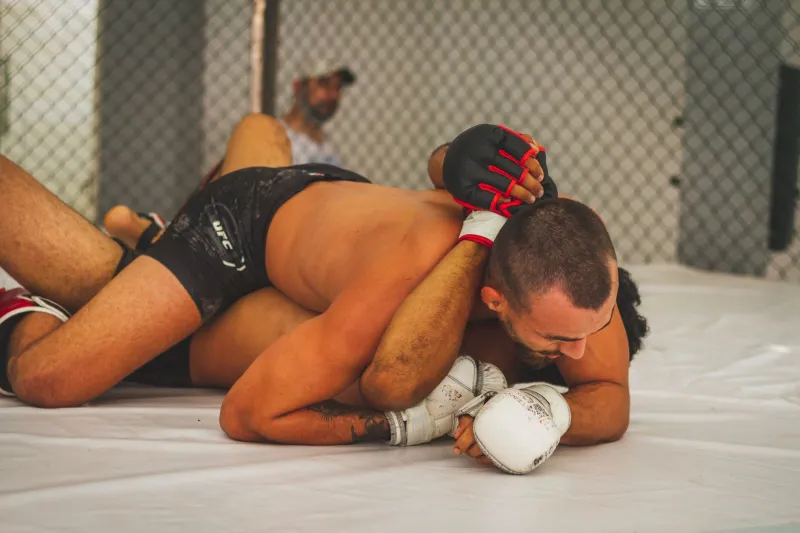
This kind of effort hammers your glycolytic energy system in a way that long-distance cardio simply doesn't replicate. It also creates significant muscular fatigue in the upper body that accumulates across rounds and compounds the cardiovascular load. Your heart rate spikes fast, recovers slowly, and spikes again — a pattern closer to wrestling or judo than to boxing.
Research on combat sports physiology consistently shows that grappling-intensive efforts produce higher peak heart rates and faster lactate accumulation than striking-only exchanges of similar duration. For Muay Thai fighters who compete in rule sets where the clinch is heavily featured, that's a big deal.
How American Fighters Are Adapting
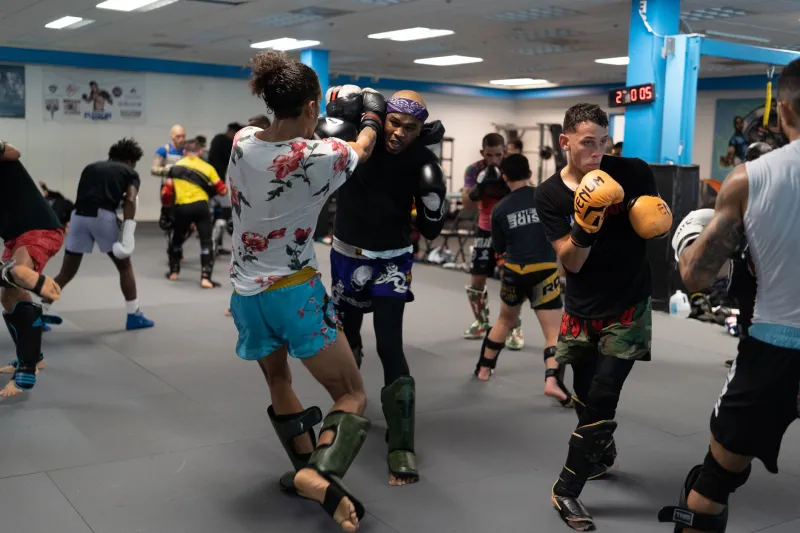
Gyms in cities like Chicago, Houston, and Los Angeles are starting to pull training methods from wrestling rooms and BJJ mats and weave them into Muay Thai conditioning blocks. It's not about turning Muay Thai fighters into grapplers — it's about stress-testing the same energy systems that get torched in clinch exchanges.
A few specific approaches are gaining traction:
Pummeling Intervals Pummeling drills — the back-and-forth underhook battles borrowed from wrestling — are being programmed as timed conditioning work rather than just technique reps. Pairs go hard for 45 seconds, rest for 15, and cycle through six to eight rounds. It sounds simple. After round three, it's anything but.
Neck Clinch Resistance Circuits Fighters work in the traditional Muay Thai neck clinch while their partners apply steady resistance — not full combat, but enough load to force sustained muscular effort. Timed rounds with minimal rest build the specific endurance needed to control that position late in a fight.
Grip-Focused Finishers Ending training sessions with grip and forearm burnouts — towel pull-ups, rope climbs, plate pinches — addresses one of the most overlooked weaknesses in Muay Thai conditioning. Fighters who can still grip and frame effectively in round five have a massive advantage over opponents whose hands have gone numb.
Sprawl and Clinch Transition Drills Some coaches are programming short scramble sequences — clinch entry, brief resistance, break, immediate striking — to simulate the explosive transitions that happen in actual fights. These teach the body to recover fast and re-engage without a full rest cycle.
Building It Into Your Program
You don't need to overhaul everything. The goal is to supplement your existing conditioning work, not replace it. A practical starting point for most fighters:
- Two days per week of dedicated clinch conditioning work, separate from technical sparring
- 15 to 20 minutes of structured grappling-specific drills after your main training session
- Progressive overload — start with longer rest intervals and shorten them over a four to six week block
If your gym doesn't have a wrestling or grappling component, partner drills like pummeling and neck clinch resistance work can be done with any training partner willing to put in the time. You don't need a wrestling mat or a grappling coach. You need someone to push against.
The Bigger Picture
The best American fighters competing on international stages right now aren't just technically sound — they're conditioned for the full picture of what Muay Thai demands. The clinch isn't a break in the action. It's a weapon, and like any weapon, it requires specific preparation to use effectively.
If your cardio program only trains the version of you that's on the outside, you're leaving a significant piece of your fight game underdeveloped. Start addressing the clinch conditioning gap now, and you'll feel the difference before your next opponent does.